Mobile-first
Built for the phone in the cab, not a desktop app stretched to fit. Field crews work the way they already work.
InspectERM
InspectERM now has its own home — everything about the inspection app in one place.
Visit the dedicated InspectERM site →Who it's for
InspectERM started where CloudERM started — with one independent rental dealer who got tired of crews filling out paper checklists that never made it back to the office. The app is built for greasy hands and bright sun: big touch targets, photos, fluid checks, hour meters, fault codes. No passwords to remember, either — crews sign in with their phone number and a one-time SMS code. Field crews get productive on day one; the office gets a record that holds up.
What we already ship
Built for the phone in the cab, not a desktop app stretched to fit. Field crews work the way they already work.
Every inspection produces a record that holds up — photos, hour meters, fluid checks, the operator's name.
No service on a back lot? Inspections queue locally and sync when the device gets a signal back — a sync-status indicator shows what is still waiting, and a push notification tells the crew when new work is assigned.
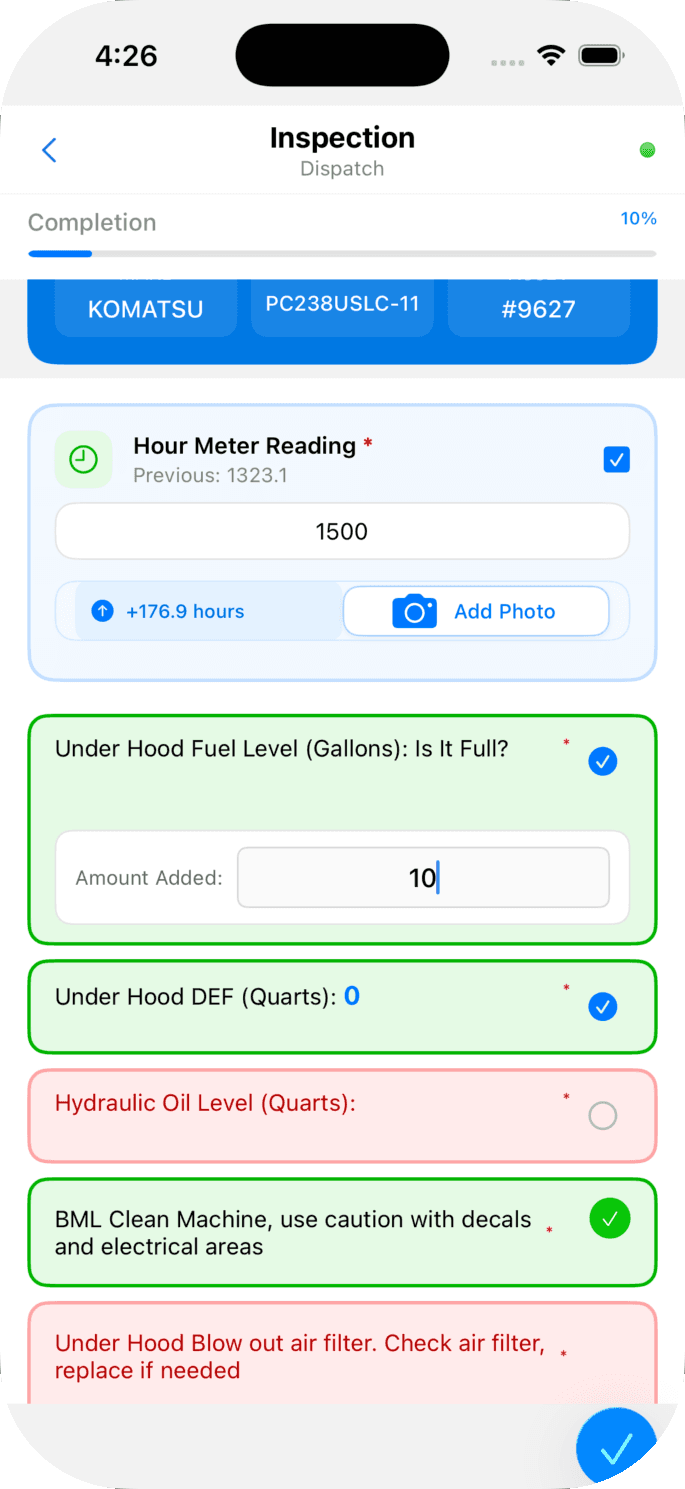
How offline mode works ↗Hour meters, fuel, DEF, fault codes — the same flow whether you're checking out or returning a unit.
Run InspectERM on its own — assets, inspection templates, inspections, and work orders — or get the same app as part of CloudERM, which adds customers, quoting, invoicing, parts, and dispatch. Add Inspection Analysis or Samsara GPS to either.
In your hand
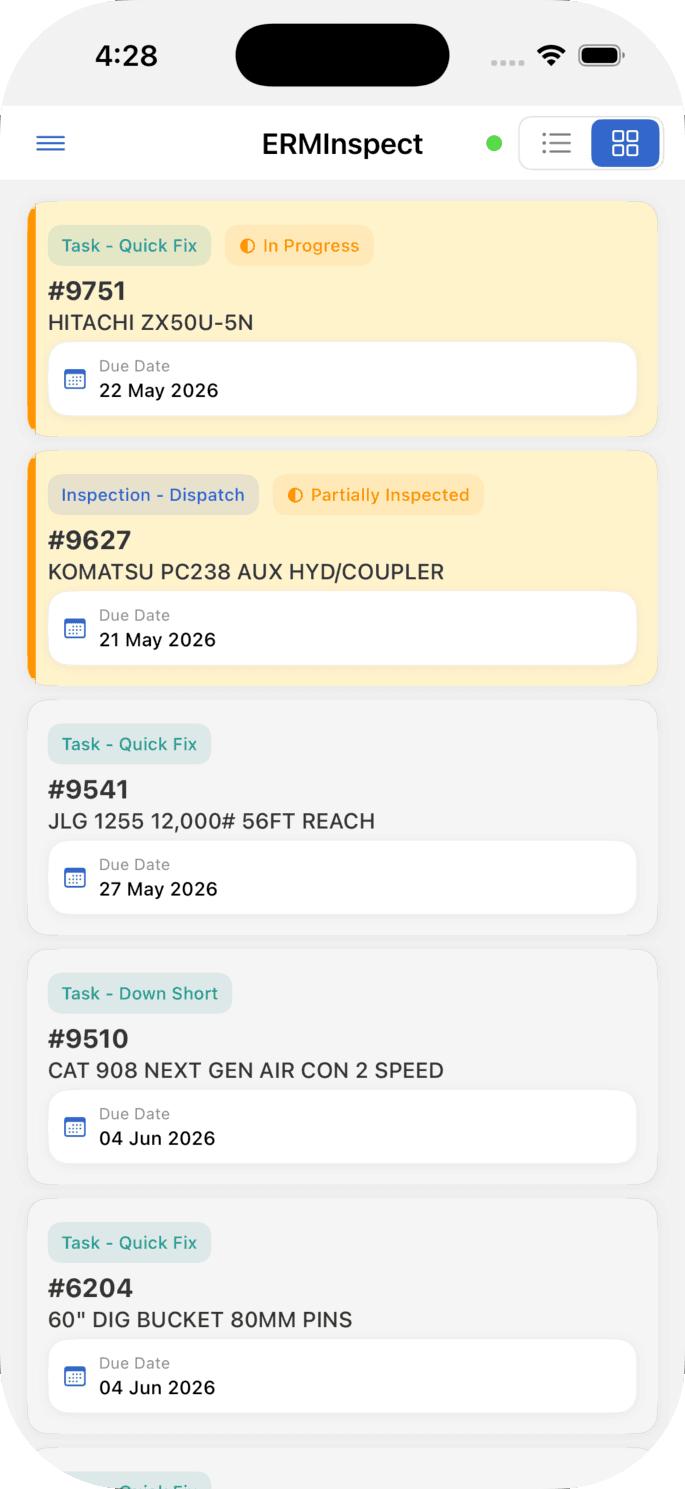
Each inspection is one screen of work — hour meter, fuel levels, fluid checks, fault codes, photos. The fields you need are the ones you see; nothing else is in the way.
More than inspections
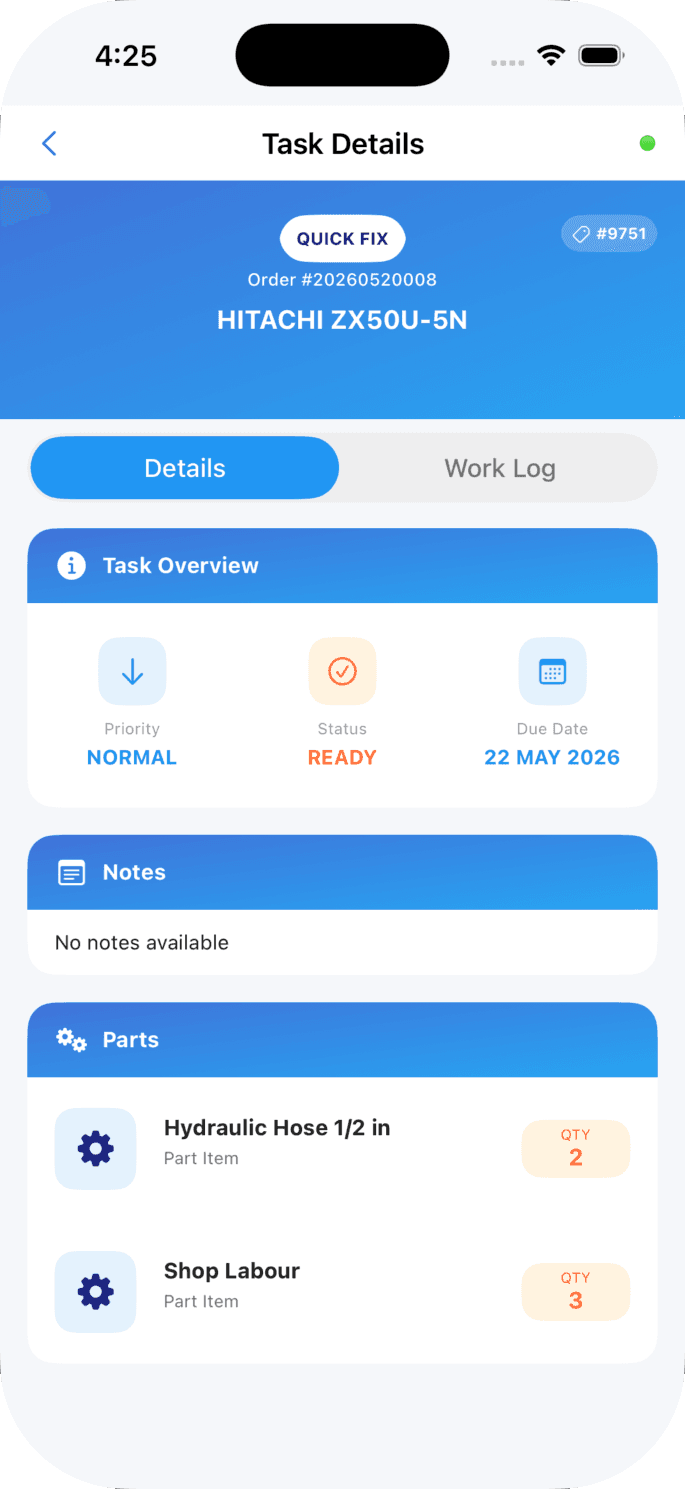
InspectERM is not just a checklist tool. Each work order lands with the parts list, the priority, the due date, and a work log — and field crews mark progress on the same screen they used for the inspections. No app switching, no double entry.
Work logs
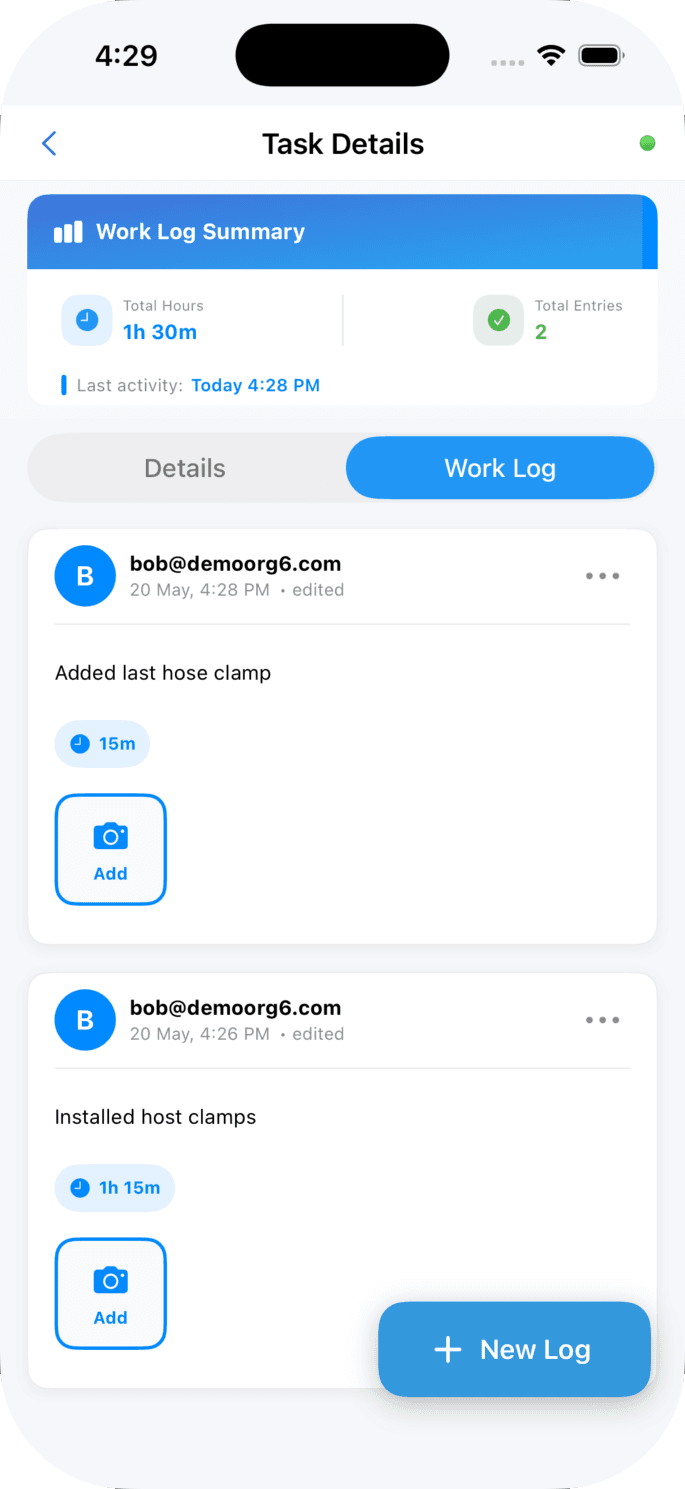
Every work order gets a running work log — time entries, photos of the work, who's clocked against it. Field crews add an entry when they pick up a work order and another when they hand it off. The office sees the actual hours billed; the customer sees the receipts. Nothing reconstructed from memory at the end of the week.
Inspections that match the asset
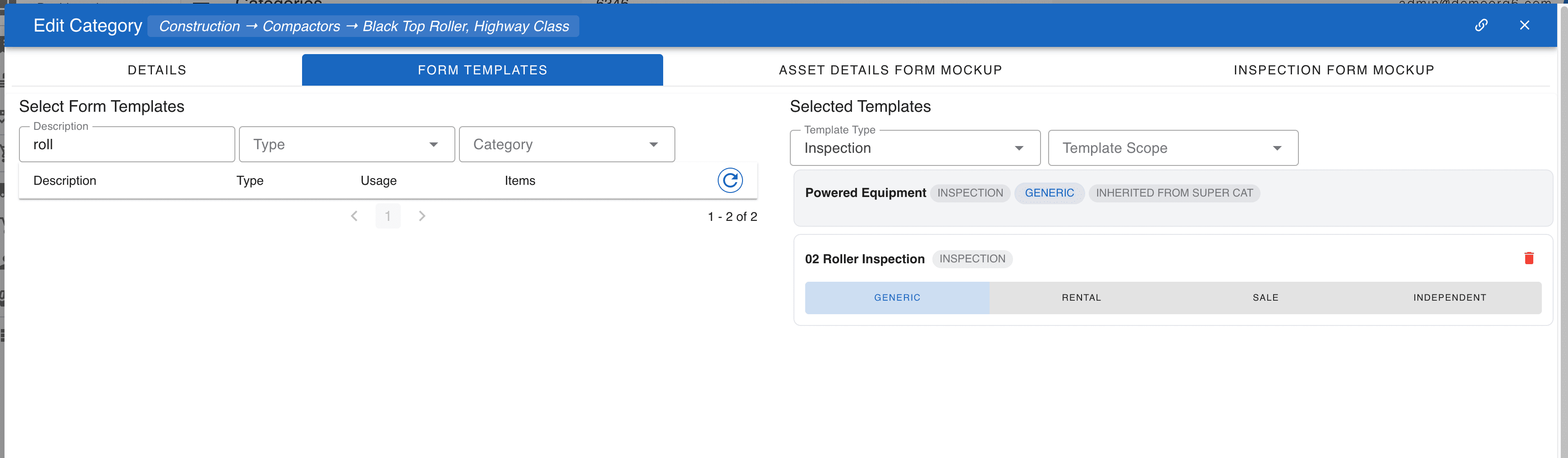
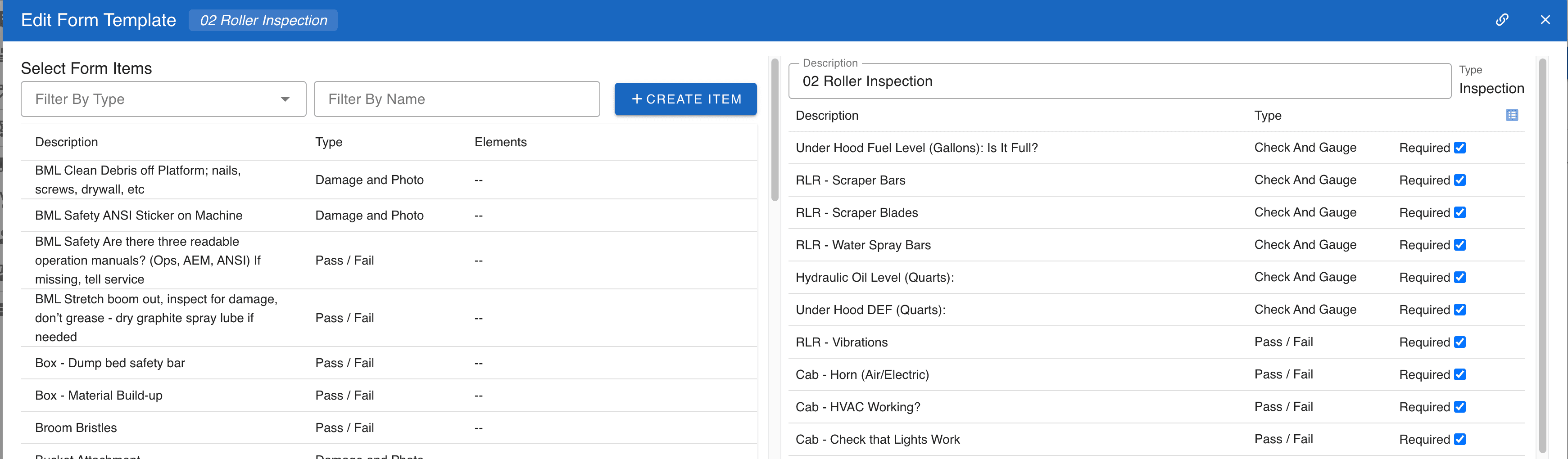
Each category in your fleet gets its own inspection template. Excavators get the hydraulics checks; air compressors get the fluid and DEF checks; rollers get drum-wear and water-spray-bar checks. Templates are inherited down the category tree so adding a new asset wires up the right inspection automatically.
Inspection Analysis
Inspection Analysis is an add-on that reviews each completed inspection within minutes of the crew finishing it. It runs on the office's side — nothing changes in the app, and nothing slows the crew down. Results land in the web app.
Every photo is checked against the question it answers and for quality, and multi-photo sets are checked for coverage. The asset number is looked for in the photos, and the hour-meter photo is read and compared with the reading the crew entered. The inspection gets an A–F grade and a 0–100 score on its Analysis tab.
On an off-rent inspection, the return photos are compared with the dispatch photos and new damage is outlined on the before-and-after pair, with a confidence level. A comparison the model can't call is marked inconclusive, not clean. The machine's condition is reported separately from the grade, so new damage never counts against the crew who found it — and the model never bills. The operator decides whether to charge.
The Technician Report averages the findings per inspector — flagged, mismatched and poor-quality photos, meter mismatches — so you can see who documents well and who needs coaching, before a damage dispute shows you.

Download
Included with every CloudERM plan — no separate license for the app. Not on the platform yet? Request a demo.