About
Built by an independent rental dealer and a software architect — for the people doing the work.
CloudERM started when one of us — an independent rental dealer who built his business from scratch — got tired of waiting on twenty-year-old vendors to ship features that should already exist. The other one of us has been shipping production software since the days of modems.
We've lived on every legacy rental ERP and a half-dozen spreadsheet stacks. We know exactly which features the legacy vendors keep promising and never ship — because we were the ones asking. So we wrote our own platform, cloud-native from day one, and we run our own equipment fleet on it.
Today CloudERM is in production with real mid-market dealers. Our day job is still the rental business — that's on purpose. If a feature ships, it's because we needed it that morning.
How we build
The rental yard is the QA team.
Most rental software is built by people who have never assigned a dispatch inspection before the asset left the yard. We have. Every feature we ship has to survive a Monday morning on a real yard before it gets released. Office crews use it for quoting and reservations; field crews use it for inspections; finance closes the books on it every month.
We treat the platform the way a manufacturer treats their own car. We drive it daily. The rough edges show themselves to us first.
What we believe
Rental software does not need to be 1995.
The legacy vendors have trained the industry to expect six-figure license fees, four-month implementations, and roadmaps that quietly slip features for years. That isn't a law of physics — it's a hangover from when on-prem servers and proprietary databases were the only option.
We think rental dealers deserve software that ships features in days, runs in a browser, gets out of the way when crews are busy, and shows the operator the actual margin on every asset. That's the whole brief.
Same brief applies to AI. Hour-meter recognition in the Inspect app. Damage analysis between dispatch and off-rent photos. Per-asset rate recommendations with sources shown. Natural-language search across the platform. Fleet demand prediction from historical usage. Suggestions the operator accepts, modifies, or overrides — never opaque decisions.
Multi-tenant production
Built for organizations, not single yards.
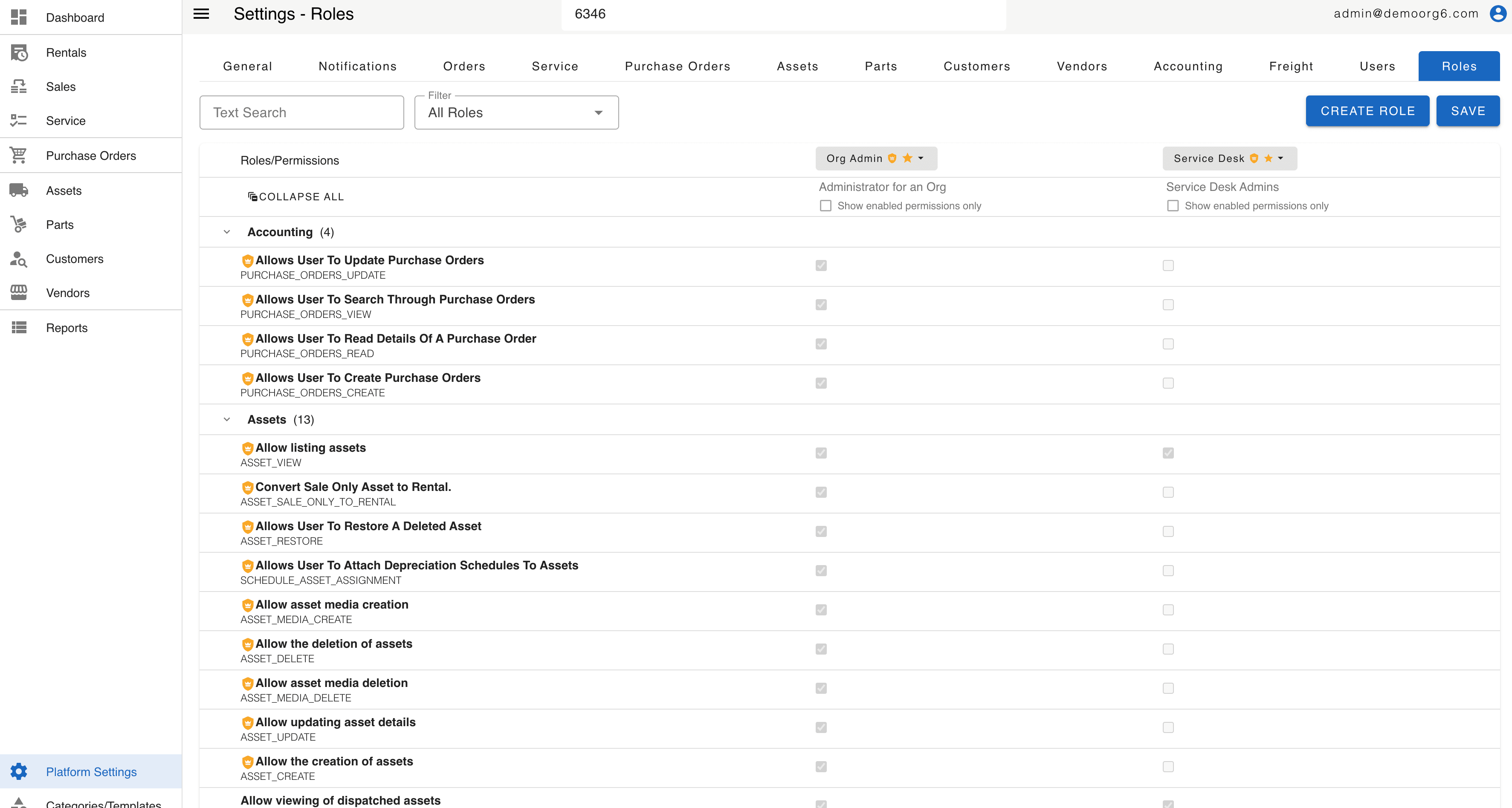
Every customer is a real isolated tenant — separate data, separate users, separate permission grants. Granular per-role access (asset view, asset update, purchase orders, depreciation schedules, dispatch) lets the office split duties cleanly between ops, service, and finance. The legacy stack handed you one admin password and called that "security"; we did not.
What’s next
The roadmap, in plain English.
Self-serve customer portal so renters can reserve online without calling the yard. Deeper integration surfaces — Samsara, telematics providers, accounting connectors. Easier per-tenant customization on the form-template system so each yard can tune inspections to its categories. The Inspect mobile app keeps gaining service depth — work logs, parts consumption, technician sign-off.
We don't put things on a roadmap to defer them. Either we're building it now, or we've made a deliberate decision not to. If you have a request for what we should build next, the demo form is the best place to leave it.
Get in touch
Want to see it?
The fastest path is a demo — we'll walk through CloudERM against your current platform, your fleet shape, and your team's workflow. No four-month evaluation gauntlet; just an honest look.